Achilles’ herb
There is a plant that follows the soldier and the healer both, and has done so longer than either has kept records. It stands in the dry open ground on a wiry stem, lifts a flat white crown of a hundred small flowers over a fringe of leaves cut so fine they look like feathers or frost, and it has one office older than the rest: it closes the wound and stems the blood. The Greeks gave it the name of their greatest warrior, who carried it onto the field at Troy. The people who came after kept the same knowledge under a hundred plainer names — staunchweed, woundwort, the soldier’s herb, the blood-stauncher — and reached for it whenever the skin was broken.
Where it grows, and how it shows up here
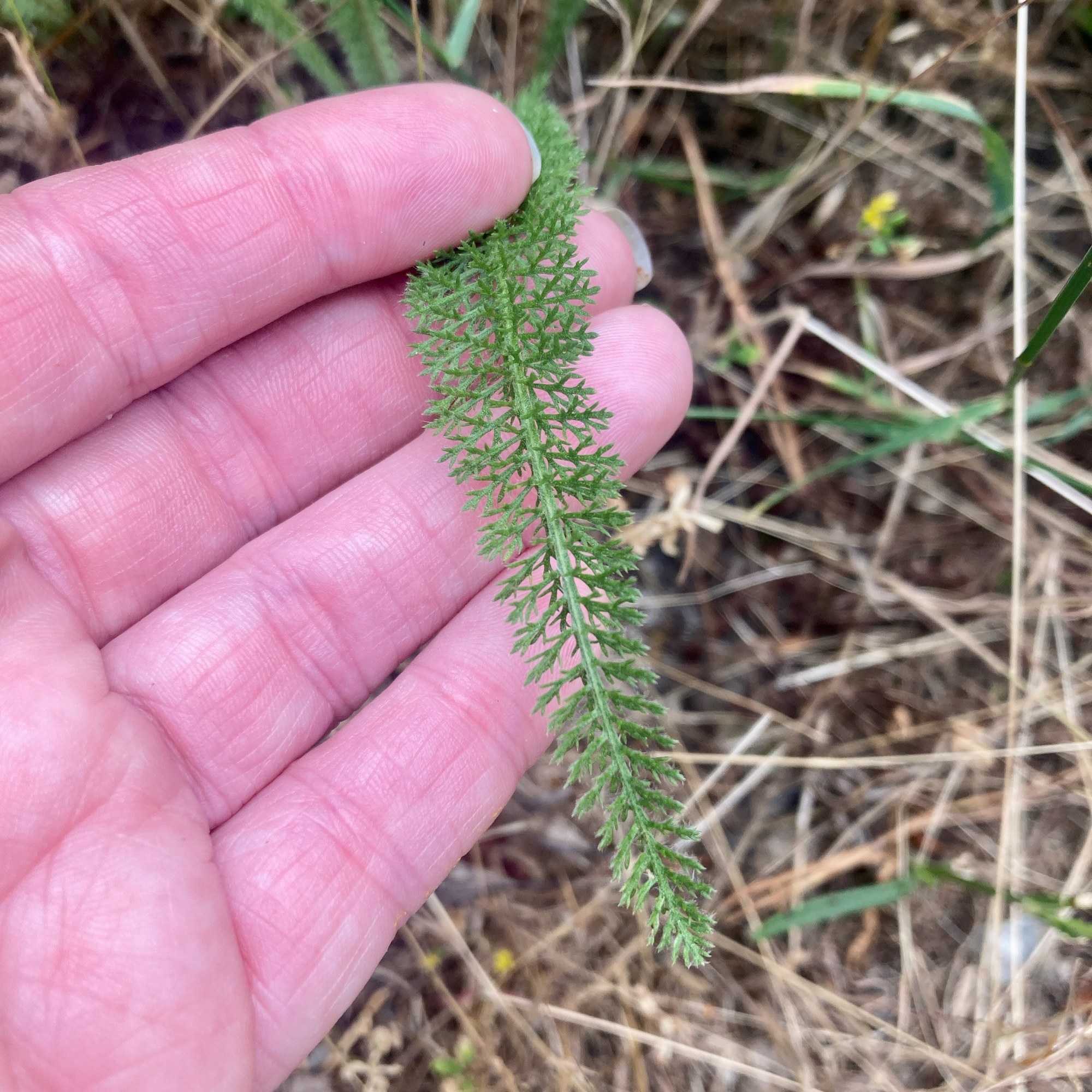
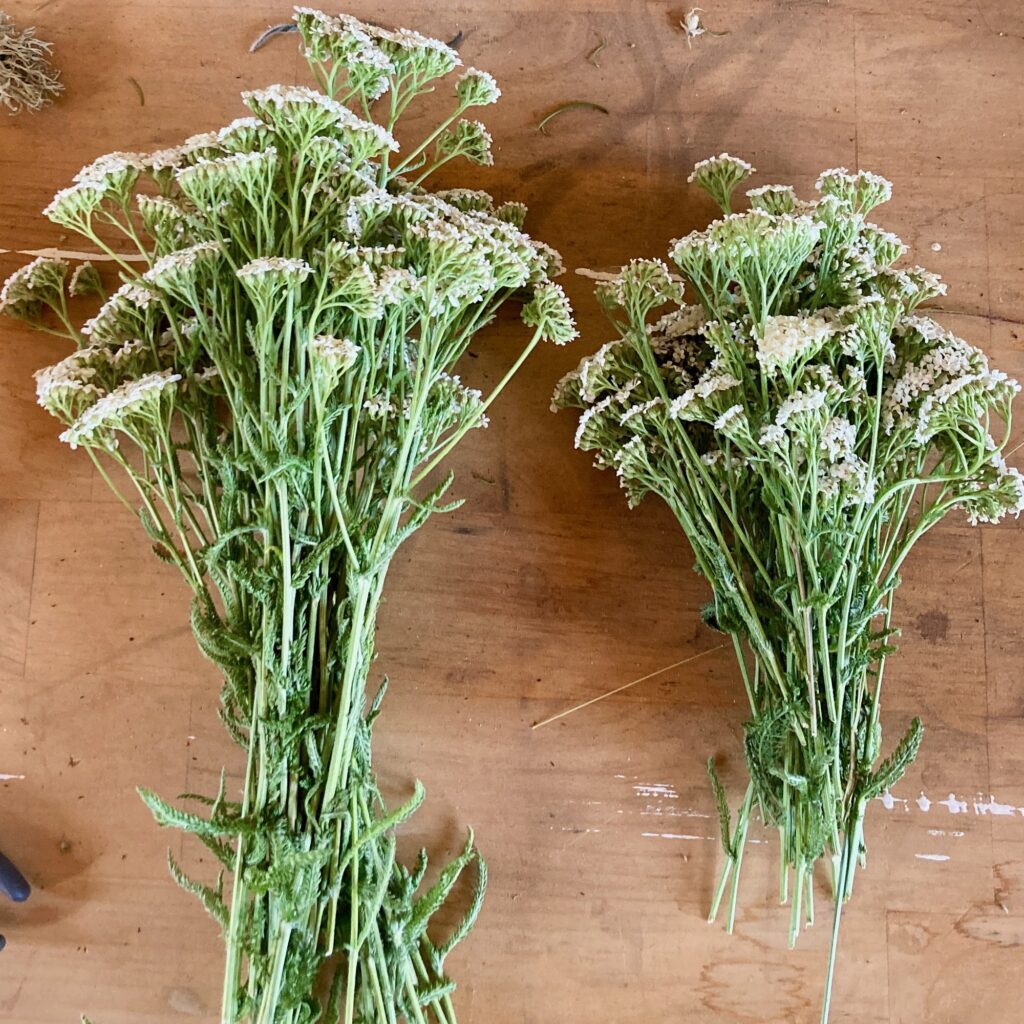
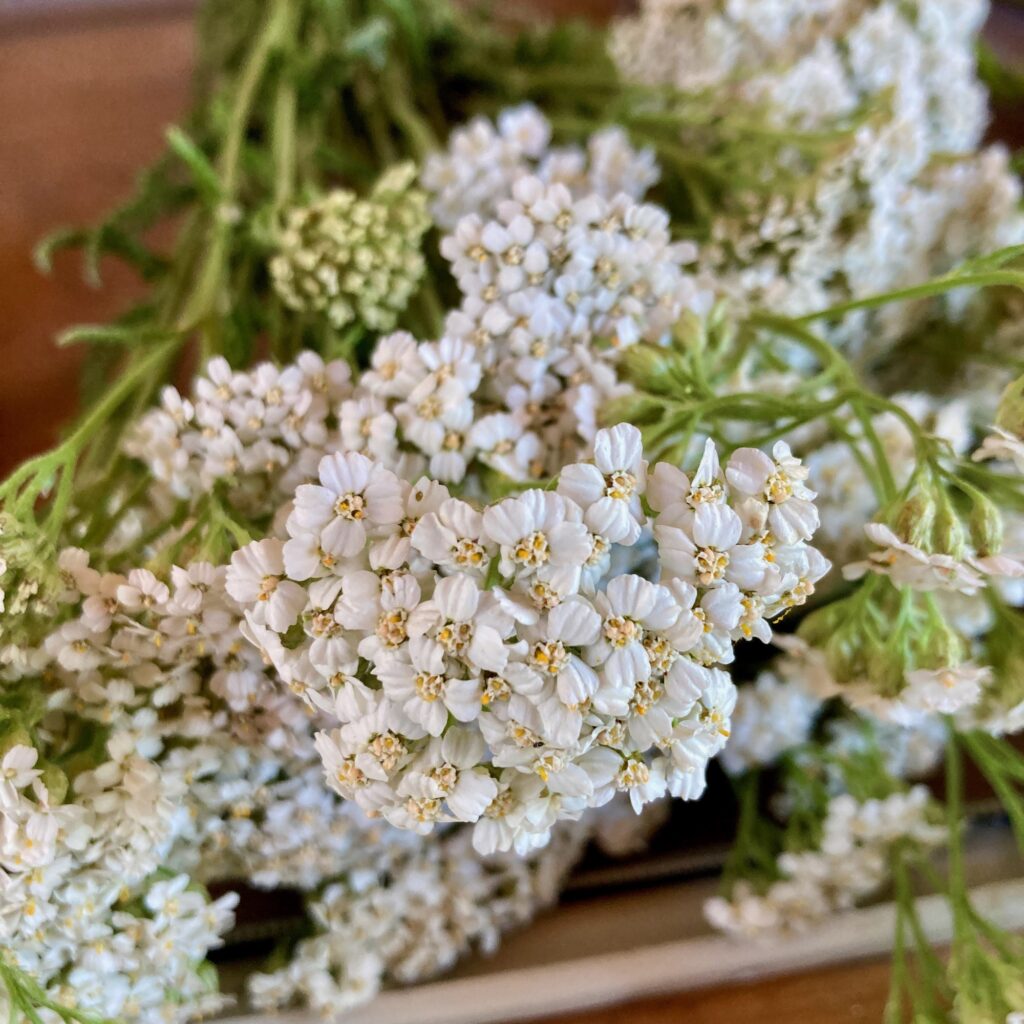
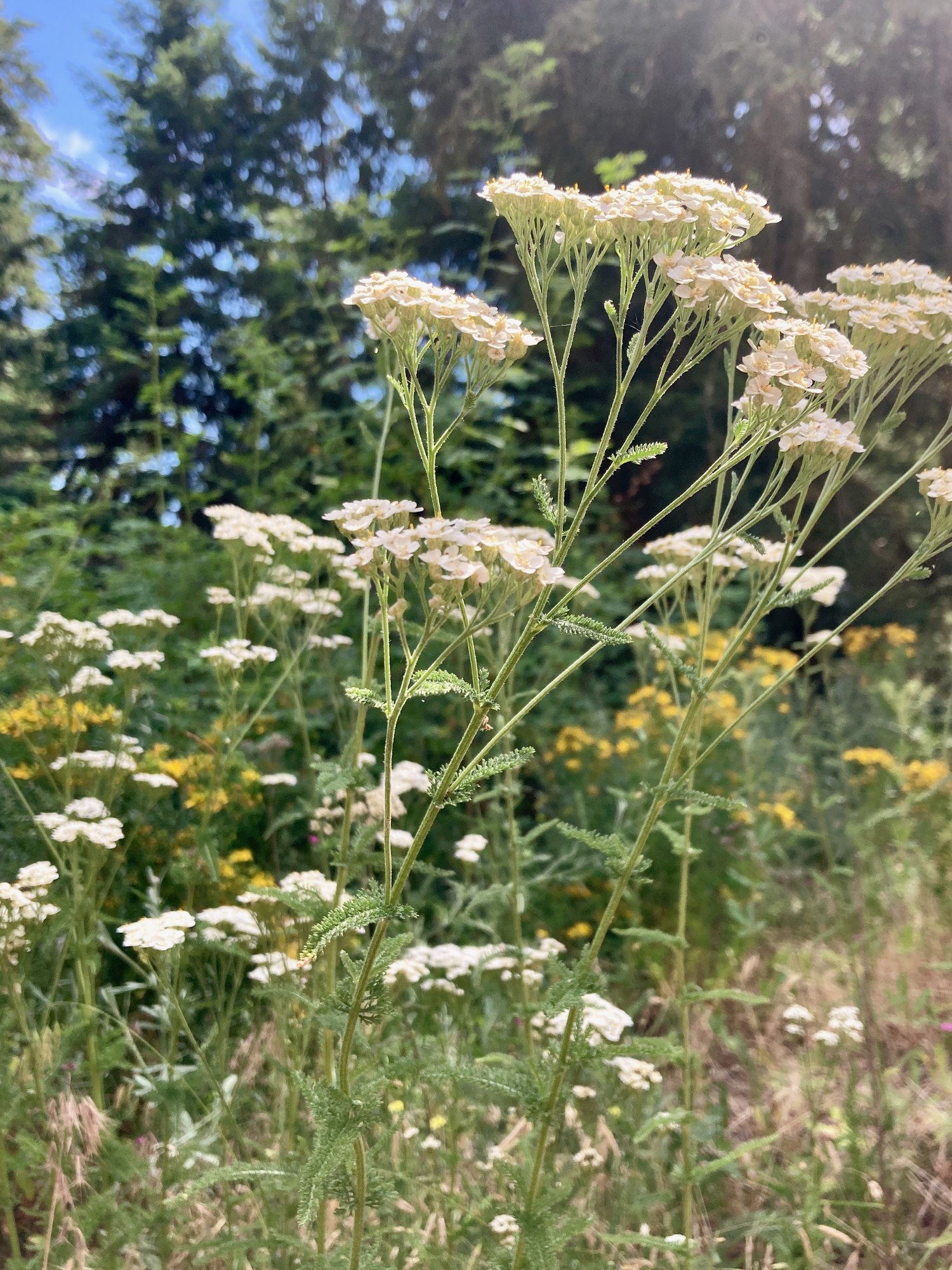
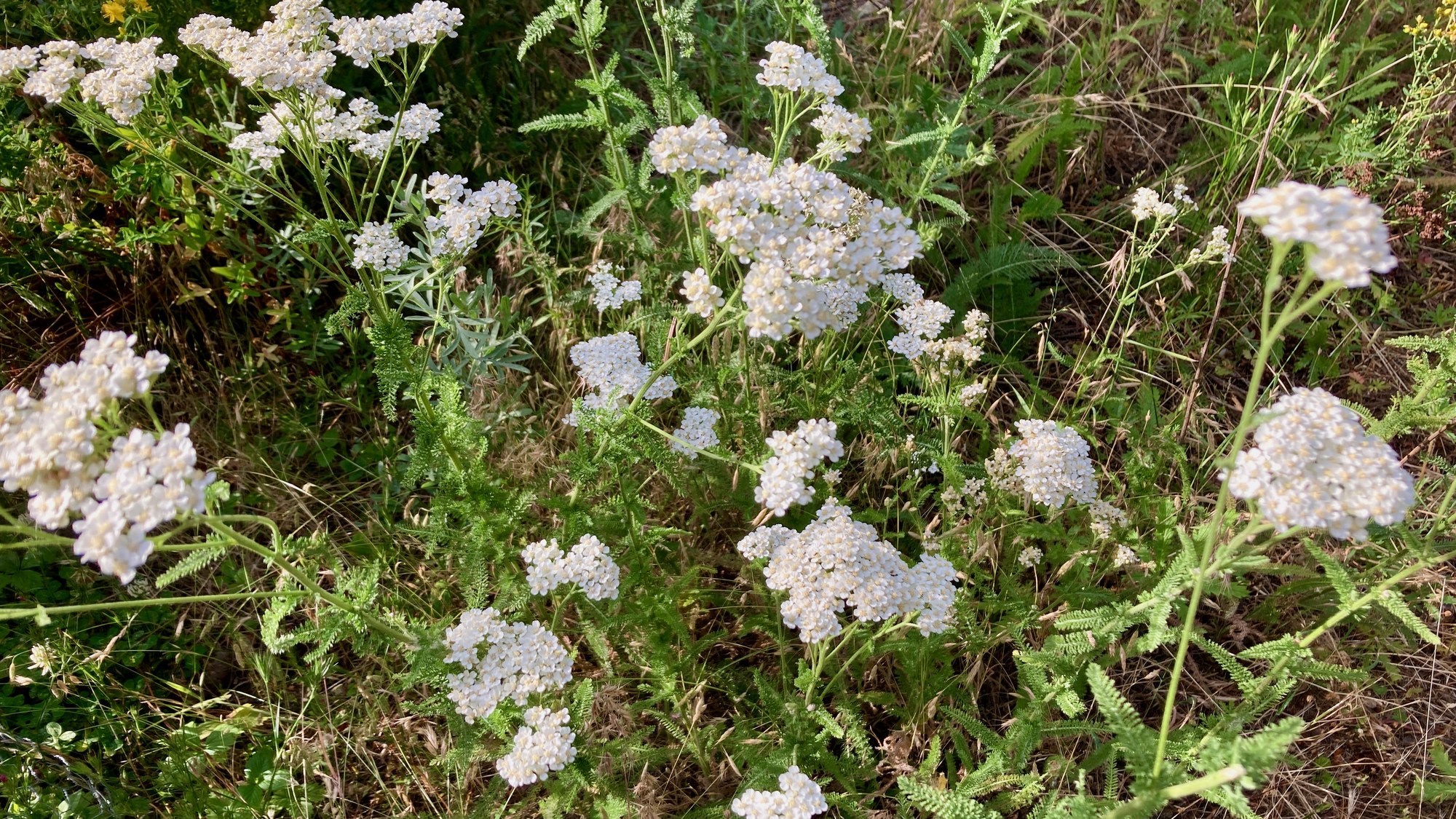
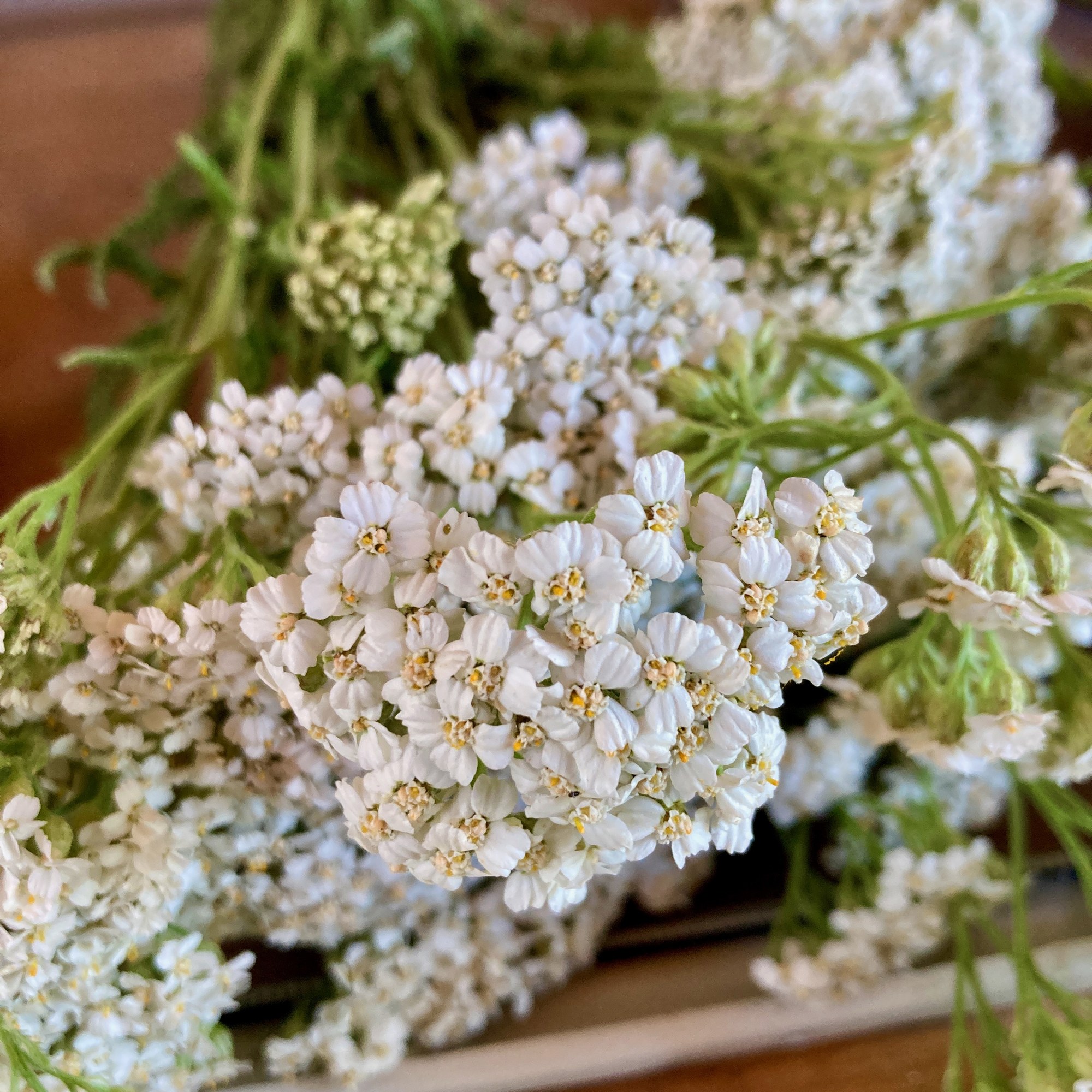
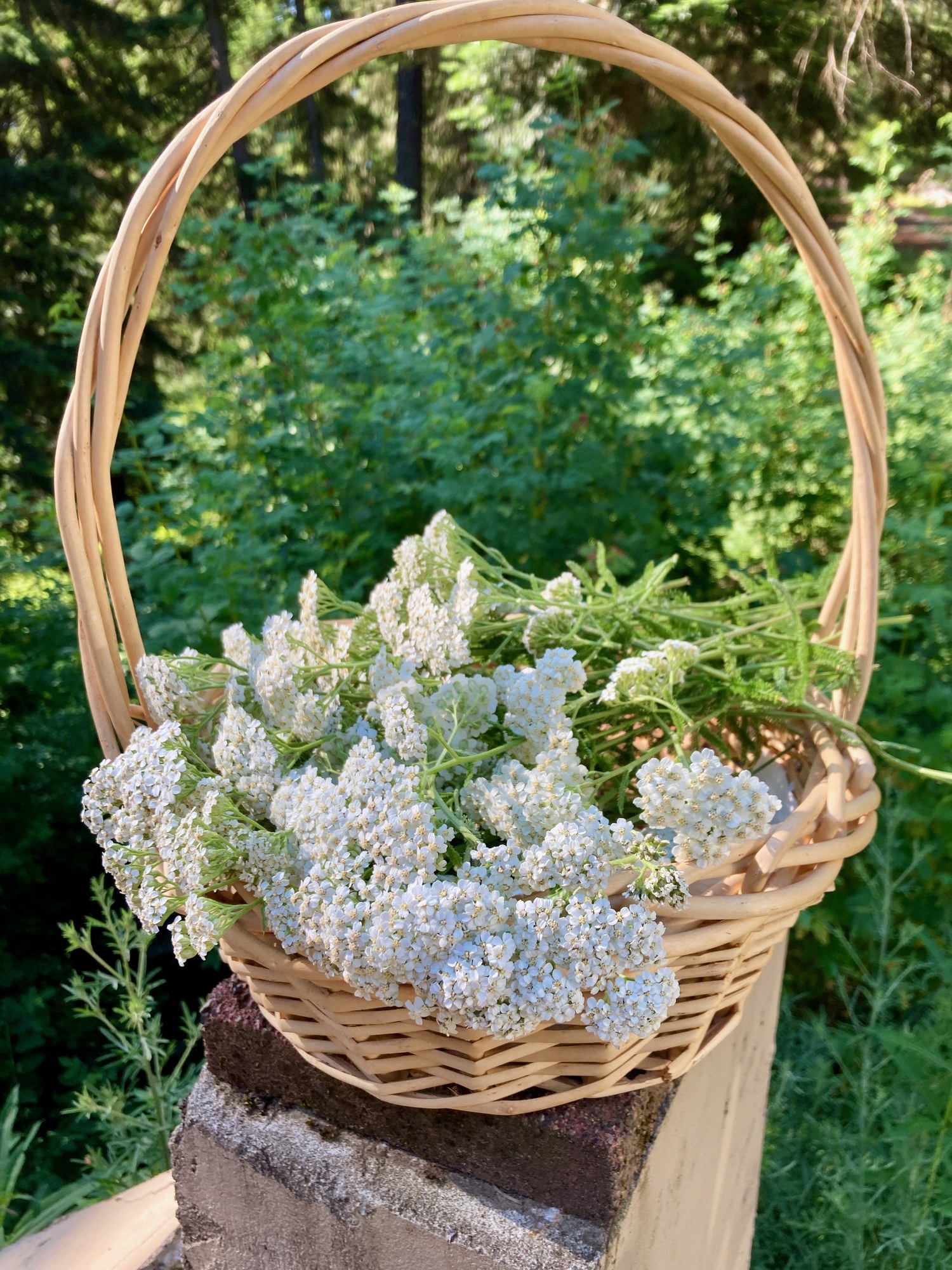
Achillea millefolium — Achilles’ thousand-leaf. The second name is the surest way to know it: pull a single leaf and it is not a leaf so much as a whole green feather, cut and cut again into hundreds of fine segments, soft and almost ferny in the hand. Millefolium, the thousand leaves — and no other plant of the open ground wears anything like them. Above the leaves the flower is just as plain to read: a flat-topped crown of many tiny five-petalled blooms, white and sometimes the faintest blush, each with a small cream heart, packed tight into a broad plate a palm could cover. The stems run tough, angular, and faintly downy, and the whole plant gives up a sharp green scent when it is bruised.
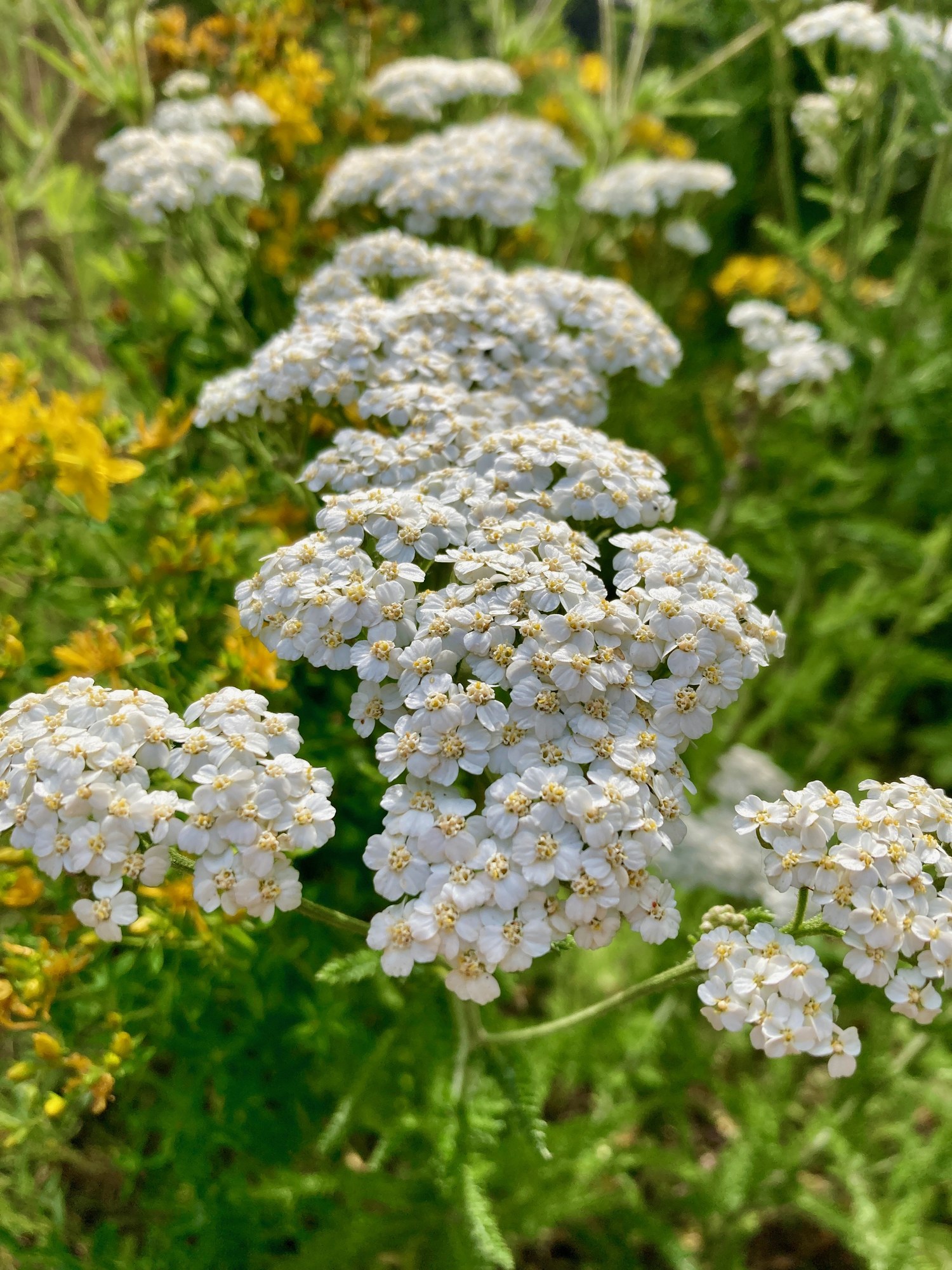
Here it keeps to the dry, sunlit open — the well-drained margins and disturbed edges where the ground bakes and the grass thins, out in the full light rather than the tree-shade. It is no delicate thing. It spreads below the ground the way arnica does, so a single patch is often one plant wearing many crowns, and it comes up tough and abundant along the bright edges, standing waist-high among the summer grasses and sharing the open ground with the other midsummer bloomers — the gold of the St. John’s Wort never far off. Where the ground is poorest and driest, yarrow is often the plant that holds it.
When it comes
Yarrow belongs to high summer, and it holds it a long while. The white crowns open toward midsummer — here they are up and gatherable by about mid-June, standing over the feathery leaves — and where the St. John’s Wort gold blazes for its few weeks and is gone, yarrow keeps on, plate after plate, through July and deep toward the fall. It is a patient bloom rather than a brief window: a stand carries fresh white crowns for weeks on end, the spent heads drying to tan on the stem while new ones open beside them. It is gathered at its white best, in full flower, when the crowns stand fresh and flat and the plant is most fully itself. The forest is generous with it; it is one of the few that never seems to run short.
Woundwort, and the casting of the stalks
No plant carried the soldier further than this one. Its Latin name is a hero’s: the old telling has the centaur Chiron, keeper of the herb-knowledge, teaching the young Achilles to lay yarrow on his men’s wounds on the field at Troy, and the plant has been Achillea ever since. The Romans called it herba militaris, the military herb; the tongues that came after kept the same office in plainer words — staunchweed, bloodwort, sanguinary, soldier’s woundwort, knight’s milfoil, and the carpenter’s herb that French tradesmen carried against the slip of the blade. Its country name nosebleed holds the whole of its strange doubleness in a single word: the same plant was used to stop a bleeding nose and, pushed up the nostril, to start one — to know a lover’s heart by whether the blood would come. In the old language of flowers it stood for war and for healing at once, and it never quite chose between them.
That doubleness runs all through its lore. It was a plant of the good and the ill together: hung over a door or a cradle it kept harm out, yet it was also devil’s nettle and devil’s plaything, named for its place in darker workings — a herb held to both summon and drive off. And it was, above almost all others, a plant of seeing. In China its dried stalks — fifty of them, counted and cast — are the oldest way of reading the I Ching, the book of changes. In the west a girl would sew yarrow into a scrap of red flannel and lay it under her pillow to dream of the one she would marry, waking with a rhyme still on her lips — pretty herb of Venus’ tree, tell me who my true love be. A sprig of it over the marriage bed was said to keep love for seven years and more. War and love, blood and dreaming: it answered to all of them.
Venus, water, and the staunching of blood
For all its soldier’s history, yarrow answers not to Mars but to Venus, and to the element of Water — a feminine plant, cool and flowing, for all that it made its name on the battlefield. Therein lies its whole character: it is the herb that meets violence with tenderness, that goes to the wound not to open it but to close it.
Its offices follow from that. First is courage — not the fury of the charge but the steadiness that outlasts fear: a bunch of dried yarrow held in the closed hand was said to stop all fear and hold the heart firm, and it was worn on the body for the same steadiness on hard ground. Close beside it stands protection and the drawing of boundaries — yarrow hung over the door or the cradle to turn away harm, worn or carried as an amulet against ill-wishing and the psychic weathers, bruised and kept close to guard the body’s own edges. It is a plant that draws a line and holds it. From its Venus nature comes love — carried and exchanged to keep faith, laid over the bed for a lasting bond, woven into the wedding to bind the vow. And from its cool water comes sight: the divining stalks and the dream-pillow, the herb steeped and taken before the cards or the runes to open the inner eye — the old ally of anyone who looks through the veil and means to come back whole. Burned or steeped, it also cleanses and banishes, driving stale and unfriendly energy out of a room or off a person.
In the working it is met as the dried flowering tops and the feathery leaf: bound into the protective sachet and the courage-charm, cast for divination, burned to cleanse, laid under the pillow, hung green at the threshold. It keeps the good company of the other midsummer guardians — St. John’s Wort, vervain, mugwort — and lends them its steadiness.
Its nature and virtue
Yarrow is the plant of the closed wound. Where arnica goes to the bruise and calls a startled self back into its body, yarrow goes to the cut: it stems the flow, draws the edges together, and holds the boundary while the mending begins. That is its truest work in every register the old world used. It staunches the blood of the body, and it staunches the subtler bleeding too — the slow leak of one’s own strength into every hurt and demand, the wound that will not close because the edge is never held. It is the herb of the good boundary: it teaches where the self ends, stops the bleeding-out, and gives the wounded the pause they need to knit. A balm for the warrior and the healer both — for anyone who has spent themselves in service and forgotten to keep a wall of their own.
Its affinities are the battlefield turned to garden; the white of the flower and the red of blood; the soldier and the seer; the threshold and the drawn line; the moment of hurt and the drawing-together of its edges. Its companions are the guardian herbs of the longest days. Like the other plants worked upon the skin, it keeps to the outside of the body and the unbroken edge — a plant of the daisy kindred, best met with a knowing hand — but its nature is steady and generous, and it does not stint: it gives its white crowns for months, and there is always more.
In the stillroom
Yarrow is the easiest of my gatherings and the most forgiving. It stands in the dry open all through the hot months, and I take the flowering tops at their white best — the crowns and a little of the feathery leaf — never more than a third of any stand, and a picture of the living patch before I cut. There is always plenty; it is one plant I never worry over.
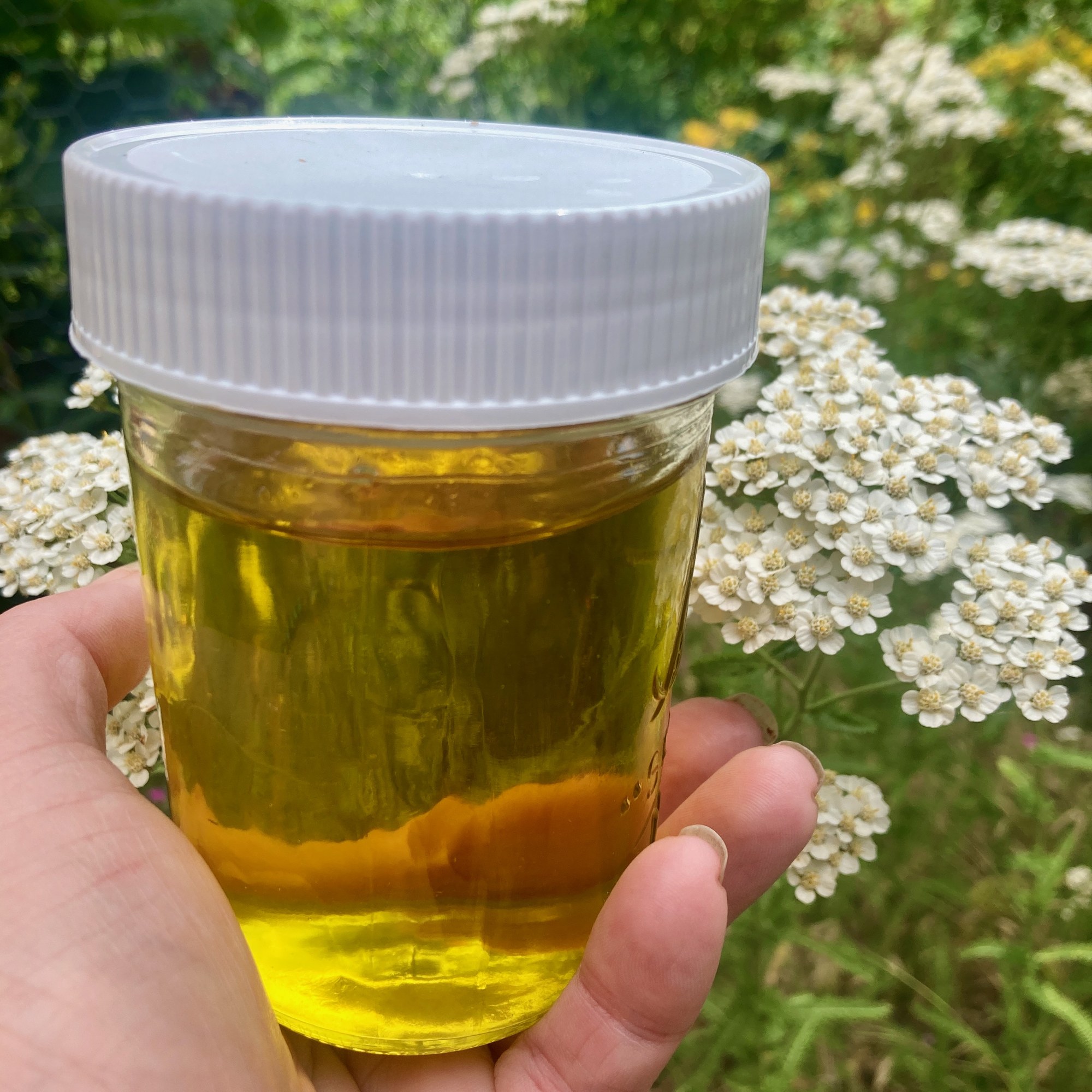
Some of it I bind and hang to dry for the bulk jar, where it keeps its white crowns and its fine grey-green leaf through the year. The rest I wilt a few hours on the screen and lay into good olive oil to steep, low and slow, until the oil goes a clear green-gold. That oil is what I carry into the blends. Yarrow meets arnica and plantain in the Trauma Blend — three plants of the grounds in a single tin — and it goes into the Bite Balm beside plantain, pineapple weed, and self-heal. Both are for the skin, and (for the arnica they carry) never for broken skin. It is a plain, useful oil from a plain, generous plant, and it earns its keep in the stillroom more than almost anything else I gather.